
Underdogs, Icons and Everything In Between: The FIFA World Cup's Best Stories Yet
From record-breaking superstars to debutant nations making history, the expanded FIFA World Cup 2026 has already delivered a tournament full of unforgettable stories. With Messi chasing immortality, Cape Verde capturing hearts, the host nations exceeding expectations, and a new qualification format creating fresh drama, these are the storylines that have defined the World Cup so far
Ananth Shivram
6/24/20267 min read
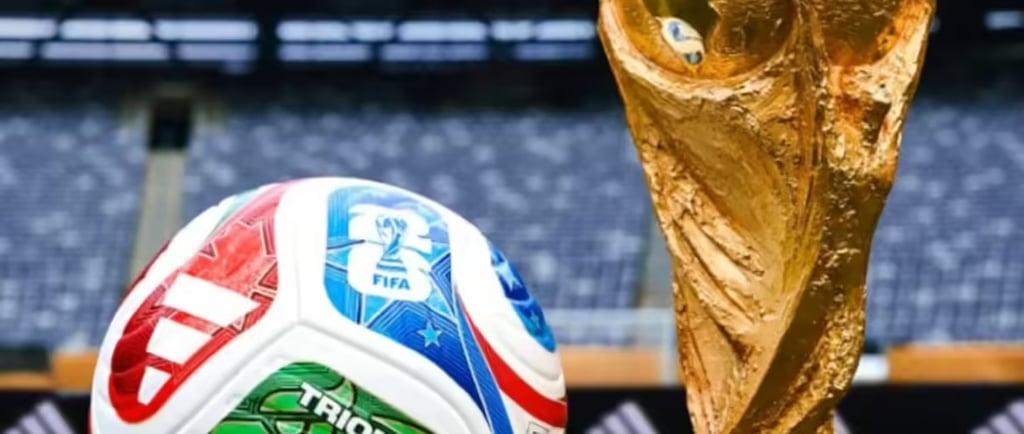
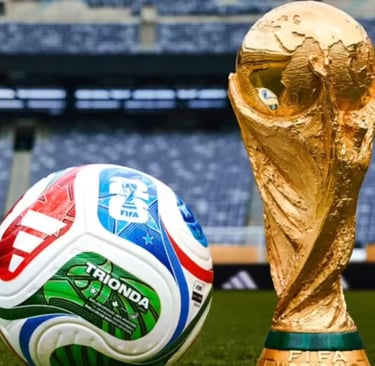
We are less than two weeks into the FIFA World Cup, and the tournament has already reminded us why it remains the greatest stage in sport.
Before we've even reached the knockout rounds, we've witnessed moments that will live long in the memory. Lionel Messi, 20 years after his World Cup debut, has scored all five of Argentina's goals so far, including a hat-trick, to become the tournament's all-time leading scorer. A goalkeeper from Cape Verde—a nation many fans were discovering on a map for the first time—produced a heroic performance to hold the European champions Spain to a goalless draw, seeing his Instagram following explode from 50,000 to more than 15 million almost overnight. And Scotland’s fan base - Tartan Army have made a statement of their own, by taking over Boston and drying the city of beer overnight.
Across the tournament, Asian and African nations have gone toe-to-toe with some of Europe and South America’s biggest powers, refusing to play the role of underdogs. Meanwhile, the three host nations have each delivered statements of their own, embracing the spotlight rather than being overwhelmed by it.
And that's the beauty of the World Cup. Long before the trophy is lifted, it gives us stories that transcend the results, creating new heroes, new memories and new believers with every passing matchday.
So, before the tournament reaches its knockout stages and the stakes rise even further, here are the storylines that have defined the 2026 FIFA World Cup so far.
The Stars Are Showing Up
For all the stories of underdogs, emerging nations and surprise results, the World Cup's biggest stage still belongs to its biggest stars.
And this tournament's leading names have wasted little time in reminding us why.
No player has shone brighter than Lionel Messi. Entering his sixth World Cup as the reigning champion, he arrived with one final record in his sights: becoming the highest goalscorer in FIFA World Cup history. Starting the tournament three goals behind Miroslav Klose's long-standing mark of 16 goals, Messi wasted little time closing the gap. A hat-trick against Algeria in Argentina's opener was followed by a brace against Austria—a match in which he also missed a penalty—as he surged past Klose to become the outright leading scorer in World Cup history. At 18 goals and counting, nearly two decades after making his World Cup debut, Messi is once again proving that greatness has no expiry date.
His long-time rival, Cristiano Ronaldo, has experienced a more turbulent start. Portugal opened their campaign with a disappointing 1-1 draw against DR Congo, a match in which Ronaldo struggled to make an impact and quickly found himself under the microscope of the global media. At 39 years old, carrying the hopes of a nation still searching for its first World Cup triumph, the pressure has never been greater. Yet if Ronaldo has built his career on anything, it is resilience. He responded in emphatic fashion, scoring twice against Uzbekistan to inspire a 5-0 victory and put Portugal firmly on course for the knockout stages.
While Messi and Ronaldo continue to defy time, a new generation is ensuring the future of the tournament remains in safe hands.
Kylian Mbappé has already found the net four times for France, keeping pace with Messi and positioning himself as the most likely challenger to the Argentine's newly claimed scoring record. Erling Haaland has marked Norway's return to the World Cup in typical fashion, scoring four goals and bulldozing his way through defences. Meanwhile, Harry Kane and Lamine Yamal continue to carry the hopes of England and Spain respectively, reminding the football world that the next era is already here.
The names may change, but one thing never does: when the World Cup arrives, the biggest stars inevitably find the spotlight.
A Bigger World Cup, A Bigger Stage
The 2026 FIFA World Cup has brought with it the most significant change in the tournament's history, expanding from 32 teams to 48 and opening the doors of football's biggest stage to more nations than ever before.
While traditional heavyweights such as Italy and Russia failed to qualify, the expanded format has given countries like Cape Verde, Curaçao, Jordan and Uzbekistan the opportunity to make their World Cup debuts. It has also welcomed back nations that have spent decades on the outside looking in, with Norway, Türkiye, Haiti and DR Congo all returning after lengthy absences.
Some have embraced the occasion as if they never left. Norway have announced their return in style, securing qualification to the knockout rounds with a game to spare, powered by the goals of Erling Haaland. Cape Verde, meanwhile, have become one of the stories of the tournament, earning remarkable draws against former world champions Spain (0-0) and Uruguay (2-2) to put themselves in contention for a historic place in the knockout stages.
Yet the impact of these nations extends beyond the results. Türkiye's squad received a hero's send-off from thousands of fans in Istanbul. Supporters across the globe celebrated as debutants scored their first-ever World Cup goals. New flags, new anthems and new stories have become part of the tournament's fabric.
That, perhaps, is the greatest argument for an expanded World Cup. It is not simply about adding more teams. It is about creating more moments. More dreams realised. More nations seeing themselves represented on football's grandest stage. And in many cases, more fans are discovering countries and stories they may never have encountered otherwise.
The Hosts Came Ready
The World Cup returned to North America for the first time since 1994, this time on an unprecedented scale, with the United States, Mexico and Canada sharing hosting duties.
Historically, World Cup hosts tend to fall into one of two categories. There are the footballing powerhouses, such as Brazil in 2014 or Germany in 2006, where hosting the tournament only amplifies expectations of lifting the trophy. Then there are the emerging football markets, nations that see the World Cup as an opportunity to accelerate the sport's growth and showcase themselves to the world, as South Korea did in 2002, South Africa in 2010 and Qatar in 2022.
The North American hosts seemed to fit somewhere in between. Mexico brought a rich footballing tradition, but the United States and Canada are still countries where basketball, American football, baseball and ice hockey often dominate the sporting landscape. Fans arrived expecting packed stadiums, vibrant atmospheres and a successful tournament off the pitch.
What few expected was how impressive all three hosts would be on it.
Mexico have been the standout performers of Group A, already assured of top spot and yet to concede a single goal. The United States have arguably made the loudest statement of all, dismantling Paraguay 4-1 before following it up with a convincing victory over Türkiye to secure their place in the knockout rounds under Mauricio Pochettino. Canada, meanwhile, produced one of the performances of the tournament so far, putting six goals past Qatar with Jonathan David leading the charge, and look destined for a place in the Round of 32.
While tougher tests undoubtedly await, the hosts have already achieved something significant. They have shifted perceptions. Rather than simply providing the backdrop for the tournament's biggest stars, they have become part of the story themselves.
For nations often viewed as outsiders in football's traditional hierarchy, this World Cup has served as a reminder that hosting the tournament can be about more than showcasing stadiums and infrastructure. It can be about announcing your arrival on the pitch as well.
The New Mathematics of Qualification
The expansion to 48 teams has not only changed who gets to play at the World Cup. It has fundamentally changed how teams navigate it.
Under the previous 32-team format, the equation was simple. Finish in the top two of your group and advance. Finish third or fourth and go home. Every team entered the final matchday knowing exactly what was required.
This World Cup is different.
With 12 groups of four teams, the top two teams in each group qualify automatically, joined by the eight best third-placed teams. The result is a qualification picture that remains alive for far longer, with more teams carrying realistic hopes of progression into the final round of group matches.
The benefits are obvious. Fewer dead rubbers. More meaningful matches. More nations staying invested in the tournament deeper into the group stage.
But it has also created a fascinating layer of complexity.
Some teams have already secured qualification. Others know their fate is sealed. Yet a significant number enter Matchday Three knowing their destiny may not be determined solely by their own result. Goal difference, goals scored and results in completely different groups have suddenly become just as important as what happens on the pitch in front of them.
For teams playing early, the challenge is straightforward: win and leave nothing to chance. For those playing later, there is a unique advantage. They step onto the field with a clearer understanding of the qualification landscape, knowing exactly what result, scoreline or goal difference may be required to secure one of the coveted third-place spots.
It has transformed the final round of group matches into a giant tournament-wide puzzle, with coaches, players and fans constantly calculating permutations as scores change across continents.
Whether the format proves better in the long run remains open for debate. What is undeniable is that it has added a new layer of intrigue to the World Cup. In a tournament where every goal already matters, some goals now matter even more because of what they mean for teams hundreds of miles away.
The result is a group stage that feels less predictable, more interconnected and alive with possibility right until the final whistle.
Less than two weeks into the tournament, the 2026 FIFA World Cup has already delivered everything we hoped for and more.
The superstars have shone. New nations have announced themselves to the world. The hosts have exceeded expectations. And the expanded format has added fresh intrigue to every matchday.
With the knockout rounds still ahead, the biggest moments may yet be to come. But if the opening chapters have shown us anything, it's that the magic of the World Cup remains as powerful as ever.
The stage is set. Now the real drama begins.