
The World Cup Gold Rush: Who Really Makes Money From Football’s Biggest Tournament?
The World Cup captivates billions of fans every four years. But beyond the action on the pitch lies a multi-billion-dollar ecosystem. Here’s a closer look at who really profits from football’s biggest tournament..
Ananth Shivram
6/7/20265 min read
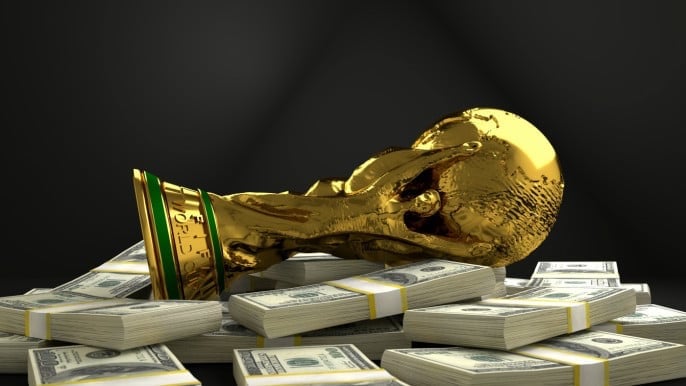
Every four years, the FIFA World Cup stops the world.
Work meetings are rescheduled. Sleep schedules are destroyed. Entire nations hold their breath for 90 minutes at a time.
Fans focus on the football. Players chase immortality. Nations dream of lifting the most coveted trophy in sport.
But away from the goals, celebrations and heartbreak lies a question that rarely gets asked:
Who actually makes money from the FIFA World Cup?
Because while only one team wins the tournament, a lot of people win financially.
From FIFA and broadcasters to sponsors, ticket resellers and marketing agencies, the World Cup has evolved into one of the largest business events on the planet.
In many ways, the tournament isn’t just a football competition anymore.
It’s an economy.
FIFA: The Biggest Winner Every Four Years
Let’s start with the obvious.
No organization benefits from the World Cup more than FIFA.
For the 2023-2026 cycle, FIFA projected revenues of around $13 billion, almost double what it generated in the previous four-year cycle.
The primary reason?
The World Cup.
The governing body controls the tournament’s biggest revenue streams: broadcasting rights, sponsorship agreements, licensing deals, hospitality packages and ticket sales.
Unlike clubs, FIFA doesn’t have to pay transfer fees.
Unlike leagues, it doesn’t have to organize hundreds of matches every season.
Instead, it spends four years building towards one event capable of generating billions in just a few weeks.
The trophy may go home with one nation.
The biggest financial prize almost always stays with FIFA.
Broadcasters Pay Billions For One Thing: Attention
In modern sport, attention is currency.
And there is no sporting event that commands attention quite like the World Cup.
The 2022 World Cup final between Argentina and France reportedly attracted an audience of more than 1.5 billion viewers, making it one of the most watched sporting events in history.
Even people who don’t follow football suddenly become invested.
For broadcasters, those eyeballs are worth billions.
The World Cup remains one of the few truly global live events left in an era where audiences are increasingly fragmented across streaming services and social media.
India provided a fascinating example ahead of the 2026 World Cup.
Despite being one of the world’s largest media markets and home to millions of football fans, the country went deep into 2026 without a confirmed broadcast partner primarily because of the timings of the games in the country.
Negotiations dragged on, highlighting a reality often forgotten in discussions around sports rights before Zee eventually picked up the broadcasting rights for all FIFA events for the next 8 years.
Even the biggest sporting event in the world has to justify its valuation.
Broadcasters aren’t paying for football.
They’re paying for attention.
Sponsors Aren’t Buying Advertising. They’re Buying Emotion.
FIFA’s commercial partners collectively spend billions to associate themselves with the tournament.
What’s interesting is that many of the most recognizable World Cup sponsors aren’t football companies at all.
Think about brands like The Coca-Cola Company, Visa, McDonald’s and Hyundai Motor Company.
None of them sell footballs.
None of them operate football clubs.
Yet they are willing to spend enormous sums to be associated with the World Cup.
Why?
Because they aren’t buying advertising space.
They’re buying emotion.
A dramatic winner in stoppage time.
A nation celebrating together.
A moment replayed for decades.
Those emotions create powerful brand associations that traditional advertising struggles to replicate.
When billions of people watch the same event at the same time, brands get something increasingly rare in the digital age: a shared global audience.
For one month, the World Cup dominates conversations across continents.
Few marketing campaigns can deliver that level of reach.
Which is why some of the biggest spenders at the World Cup aren’t sports brands at all—they’re companies selling soft drinks, payment services, cars and fast food.
They’re not investing in football.
They’re investing in attention.
The Business of Scarcity
If broadcasters sell access to viewers, ticketing sells access to experiences.
And demand has never been higher.
The 2022 World Cup generated over 3 million ticket sales, while FIFA expects demand for 2026 to reach unprecedented levels due to the tournament being spread across the United States, Canada and Mexico.
The challenge is simple.
Millions want tickets.
Only a fraction get them.
That scarcity creates value.
It also creates controversy.
Fans have already expressed concerns over ticket prices, hospitality packages and resale markets.
Some supporters buy tickets to create memories.
Others buy them hoping to make money.
As a result, a World Cup ticket has become more than an entry pass.
It’s often a tradable asset.
One whose value can rise dramatically depending on the match and demand.
The Players: The Stars Who Create the Product
Here’s an interesting fact to note .
Players don’t earn salaries from FIFA for playing at the World Cup.Their weekly wages continue to come from their clubs.
National federations may provide appearance bonuses and share prize money, but players aren’t receiving Premier League-sized paychecks from FIFA every month during the tournament.
What players gain instead is exposure.
The World Cup remains football’s biggest shop window.
A strong tournament can transform careers.
Suddenly clubs are interested.
Contract negotiations become easier.
Sponsorship opportunities increase.
Transfer fees rise.
In many cases, what a player earns after the World Cup is worth far more than anything earned during it.
Clubs Win Without Even Being There
One of football’s strangest realities is that clubs often benefit from a tournament they don’t control.
When a player shines on the biggest stage, his market value increases.
But clubs don’t just benefit indirectly.
FIFA actually compensates them.
Through the Club Benefits Programme, FIFA pays clubs for releasing players to participate in the World Cup.
For Qatar 2022, approximately $209 million was distributed to clubs around the world.
The logic is straightforward.
Clubs pay player salaries all year.
National teams borrow those players for the World Cup.
FIFA therefore shares some of the financial rewards.
So while clubs take on the injury risk, they also receive compensation and often enjoy a rise in player valuations if their stars perform well.
Host Nations: Prestige Versus Profit
The biggest myth surrounding the World Cup is that hosting automatically generates enormous profits.
Reality is much more complicated.
Hosting requires significant investment.
Stadium construction.
Infrastructure upgrades.
Security operations.
Transport improvements.
Tourism facilities.
The costs can run into billions.
Supporters argue these investments create long-term benefits through tourism and economic activity.
Critics point to underutilized stadiums and inflated projections.
What is undeniable is that the World Cup provides something difficult to quantify:
Global visibility.
For one month, the host nation becomes the centre of the sporting world.
Whether that attention ultimately translates into financial returns remains one of sport’s most debated questions.
The Attention Economy
Perhaps the most interesting winners aren’t FIFA, broadcasters or sponsors.
They’re the companies built around conversation.
Prediction platforms.
Fantasy games.
Marketing agencies.
Data providers.
Content creators.
Media companies.
Every goal becomes content.
Every upset becomes engagement.
Every controversy becomes traffic.
The World Cup doesn’t just generate football fans.
It generates clicks, views, downloads, subscriptions and advertising revenue.
For many businesses, the tournament represents one of the largest spikes in online engagement available anywhere in the world.
Companies don’t need to sponsor the World Cup.
They simply need to become part of the conversation surrounding it.
More Teams, More Matches, More Money
The 2026 World Cup will feature 48 teams and 104 matches, up from 64 matches in the previous format.
Commercially, the logic is obvious.
More teams mean more countries invested.
More countries mean more viewers.
More viewers mean more sponsorship opportunities.
More matches mean more inventory to sell.
The expansion isn’t just a football decision.
It’s a business decision.
And potentially the most lucrative one FIFA has ever made.
The Real Product Isn’t Football
The World Cup is often presented as a competition between nations.
And at its heart, that’s exactly what it is.
But economically, it has become much more.
It is a media property.
It is a sponsorship platform.
It is a ticketing business.
It is a tourism engine.
It is a content machine.
It is an attention economy worth billions.
FIFA sells that attention.
Broadcasters pay for it.
Sponsors chase it.
Ticket resellers monetize it.
Marketing agencies amplify it.
Players leverage it.
And billions of fans create it.
Every four years, one country lifts the trophy.
But long before the final whistle blows, an entire ecosystem has already won.