
The IPL Auction vs Global Sport: How Talent Is Bought, Drafted and Traded around the World of Sport
The IPL auction is more than high drama — it’s a statement on how modern sport values talent. From franchise cricket leagues to football’s transfer window and American drafts, this piece compares how elite sports distribute players, and what those systems reveal about power, parity and control.
Ananth Shivram
12/14/20253 min read
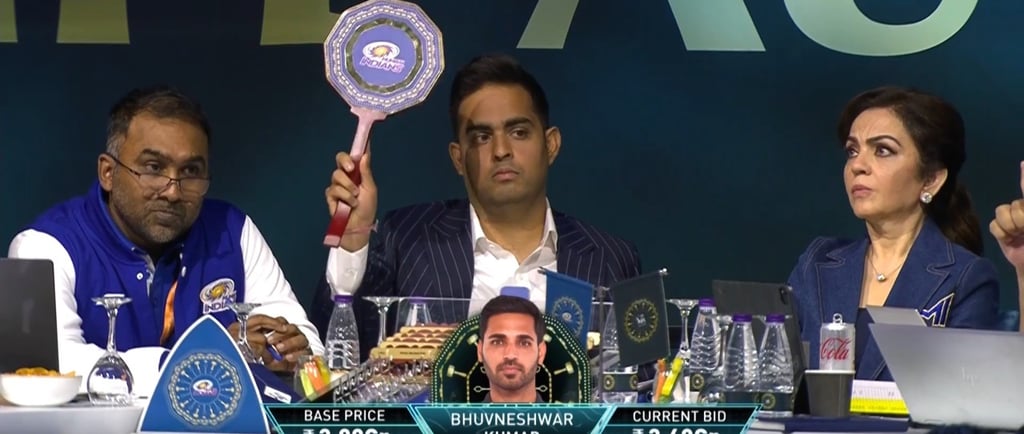
For a few hours every year, the Indian Premier League compresses the careers, reputations and futures of hundreds of cricketers into a single room. Paddles go up. Phones buzz. Numbers escalate. A player becomes a multi-crore headline or fades quietly into the unsold list.
The IPL auction is theatre, but it is also an economic experiment. It is cricket’s most visible attempt to answer a question every elite sport must confront: how should talent be distributed fairly, sustainably and entertainingly?
Around the world, leagues have answered that question in very different ways — through auctions, drafts and open transfer markets. Comparing these systems reveals not just structural differences, but the values each sport prioritises: parity, player freedom, financial control or long-term stability.
The IPL Auction: Controlled Chaos
At its core, the IPL auction is a closed-loop marketplace. Every franchise operates under a salary cap. Retentions, Right-to-Match cards and squad limits ensure no team can hoard talent indefinitely. All available players enter the same open bidding environment, where price is determined publicly and instantly.
The drama is obvious, but so is the logic. Auctions compress months of planning into hours of execution. Teams must balance star power with squad depth, local knowledge with overseas impact, and short-term needs with future cycles.
What the IPL auction values
Competitive balance over continuity
Immediate impact over long-term development
Transparency over negotiation
Entertainment as a feature, not a by-product
Compared to other systems, the IPL:
Gives franchises equal access to elite talent
Limits financial dominance through a hard cap
Severely restricts player agency
Makes valuation public and unforgiving
The IPL auction does not pretend to offer stability. Instead, it offers opportunity — fast, volatile and brutally honest.
Other Franchise Cricket Leagues: Stability Over Spectacle
Most franchise cricket leagues around the world have borrowed ideas from the IPL — but stopped short of replicating its intensity. Instead of full-scale auctions, these competitions rely on draft-based or hybrid systems, often supported by salary bands, retention rules and centrally managed contracts.
The structures differ from league to league, but the underlying philosophy is consistent.
What these systems prioritise
Stability over high-stakes drama
Player welfare alongside competitive balance
Continuity to help teams build lasting fan connections
Compared to the IPL, these leagues:
Feature smaller financial gaps between selections
Reduce auction-day volatility
Offer greater security for local players
Limit global bidding wars for talent
These models reflect an important reality that the IPL can afford to ignore: not every market has the player depth, broadcast reach or financial muscle to sustain auction chaos. Softer systems are not compromises — they are necessities.
In doing so, these leagues present an alternative vision for franchise cricket’s future — one that favours sustainability, predictability and long-term growth over scale and spectacle.
Football’s Transfer Window: Freedom and Financial Gravity
Football operates on a fundamentally different economic logic. Players are contracted assets. Clubs negotiate transfer fees between themselves, while players and agents negotiate wages, bonuses and clauses.
There is no universal salary cap. Financial power often dictates sporting success.
What football’s system values
Player autonomy
Long-term squad building
Market-driven valuation
Compared to the IPL:
Players have significant control over moves
Wealthier clubs retain structural advantages
Talent accumulation is rewarded, not reset
Competitive balance is secondary to freedom
Football’s system enables careers to be planned strategically. Players can peak, move, decline and exit on their own terms. But the cost is inequality — one that regulation has struggled to correct.
Where the IPL redistributes talent by force, football relies on money and contracts to shape outcomes.
American Sports Leagues: Drafts, Development and Delayed Freedom
American leagues sit somewhere between auctions and transfers, using drafts as the primary talent entry point.
NBA: Structure Before Freedom
The NBA draft allows the weakest teams first access to elite young talent. Rookie contracts are fixed, limiting early earnings but guaranteeing opportunity. Only later does free agency grant stars true leverage.
What the NBA values
Competitive balance with time
Player development
Gradual empowerment
Compared to the IPL:
No bidding wars for new talent
Player choice is delayed, not denied
Careers are less auction-dependent
Value is spread across seasons, not hours
NFL: Parity Above All Else
The NFL takes regulation even further. A hard salary cap, reverse-order draft and non-guaranteed contracts prioritise league-wide competitiveness.
What the NFL values
Absolute parity
Franchise sustainability
Replaceability over stardom
Compared to the IPL:
Minimal player leverage
No market-based valuation
Longevity over instant impact
Teams control outcomes far more than players
In both leagues, drama exists — but it is institutional rather than theatrical. The system decides more than the market.
What the IPL Auction Gets Right — and Wrong
The IPL auction is often criticised for being ruthless. That criticism is not incorrect. But it is incomplete.
What it gets right
Prevents long-term dominance
Forces intelligent squad-building
Democratizes opportunity for uncapped players
Keeps every franchise relevant
Turns team construction into a skill
What it gets wrong
Treats players as short-term assets
Offers little career stability
Punishes form dips harshly
Devalues loyalty
Compresses livelihoods into a single event
The IPL auction prioritises the league over the individual. That choice has made it wildly successful — but not without cost.
There is no perfect system for distributing sporting talent. Every model reflects what its sport values most.
Auctions prioritise balance and spectacle
Drafts protect teams and parity
Transfers empower players
Hybrid models seek compromise
The IPL auction is not broken. It simply makes its trade-offs visible. It exposes value in public, forces accountability and resets power regularly.
In an era where sport increasingly resembles business, the IPL auction may be the most honest marketplace of all — exhilarating, unforgiving, and impossible to ignore.