
The IPL at Nineteen : Cricket's Billion Dollar League
From a fearless 158 on opening night to $1.7 billion franchises, the Indian Premier League has grown up in public. This article explores the five defining shifts that transformed it from raw potential into a global sports business institution
3/28/20263 min read

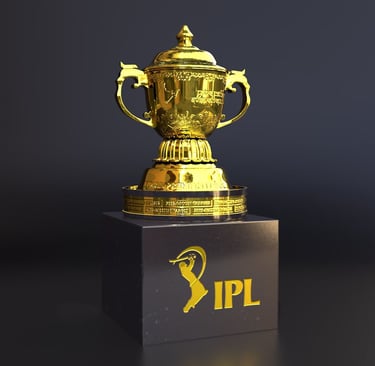
At 19, most things are caught in between
Not quite a child anymore. Not fully an adult either. There’s confidence—but also a search for identity that’s finally starting to settle.
That’s exactly where the Indian Premier League stands today.
Because this league never arrived quietly.
On its very first night, Brendon McCullum didn’t just score 158*. He announced a disruption. It was fearless, unrestrained, and completely new. The IPL didn’t ease into cricket.
It redefined how cricket could be consumed.
Back then, it felt like raw potential—explosive, entertaining, but still figuring itself out.
Nineteen seasons later, franchises are touching $1.6–1.8 billion valuations
The energy is still there.
But now, there’s direction behind it.
And that journey—from instinct to intent—can be traced through five defining shifts.
Broadcast Boom → From TV Rights to Media Empires
There was a time when the IPL lived inside your living room.
You tuned into Sony Max at a fixed hour. Matches were events you planned your evening around. If you missed it, you missed it.
That model built loyalty.
But the next phase built scale.
With the rise of digital and the entry of players like Viacom18 alongside Star India, the IPL broke free from time slots and screens.
It moved to phones. To tablets. To everywhere.
Now, fans don’t just watch the IPL—they track it, clip it, share it, and react to it in real time. A six isn’t just seen; it’s replayed, memed, and discussed within seconds.
The IPL is no longer appointment viewing.
It’s constant presence.
Expansion Economics → More Teams, Bigger Pie
The addition of Gujarat Titans and Lucknow Super Giants wasn’t just expansion.
It was a statement.
Early IPL teams were experiments—some soared, some struggled. But billion-dollar bids for new franchises signalled something different: certainty.
Owning an IPL team was no longer speculative.
It was scarce and premium.
Expansion didn’t just add matches—it expanded the economic universe of the league. More cities, more fans, more regional identity—but within a tightly controlled structure that ensured value only moved one way.
Up.
Franchise Globalisation → IPL Goes Offshore
The IPL’s influence now extends far beyond India. Franchises have built footprints across South Africa, the UAE, and the United States. The same brands, the same operational DNA—just different markets.
What started as city loyalties is now evolving into global franchise networks.An IPL team today doesn’t switch off after two months.
It operates year-round, across leagues, building continuity in brand, talent, and fan engagement.
This is where the IPL quietly separated itself.
It didn’t just grow. It became exportable.
Commercial Maturity → From Sponsorships to Ecosystems
IPL sponsorships used to be about visibility.
Logos on jerseys. Branding on boundary boards. Mentions during commentary.
Today, that’s just the surface.
Brands now plug into the IPL at multiple levels—digital activations, fan engagement campaigns, data-driven targeting, and content collaborations.
They don’t just appear during the game.They become part of how fans experience it.
A fantasy league interaction, a second-screen stat, a social media moment—these are all touchpoints where brands live alongside the cricket.
The IPL didn’t just increase sponsorship value.
It redefined what sponsorship means
Valuation & Ownership → From Passion to Portfolio
In its early years, the IPL was driven by individuals.
It had personality. Flair. Owners who were as visible as the teams themselves.
Today, the ownership landscape looks very different. Consortiums, institutional investors, and global sports stakeholders are entering the space. Capital is more structured. Decisions are more strategic.
And the numbers reflect it.
Franchises now being valued at $1.6–1.8 billion isn’t just growth—it’s validation.
The IPL has transitioned from being a high-profile investment to a recognised asset class within global sports.
It’s no longer just about owning a team.It’s about owning a piece of a system that consistently creates value.
At 19, the IPL stands right on the edge of adulthood.
It still carries the spontaneity that made it compelling in 2008. A game can still turn in an over. A player can still become a name overnight. That unpredictability hasn’t disappeared.
But now, it sits on top of structure, strategy, and scale.
The IPL has grown—not by losing what made it special, but by understanding how to harness it.