
Merely Surviving, Not Thriving: The State of Indian Football
Indian football feels caught between hope and uncertainty. From East Bengal’s historic ISL triumph to growing concerns around the league’s future, this piece explores how the sport reached this point — the rise of the ISL, the fading stability beneath it, and why grassroots stories like Minerva Academy still offer hope. Because the biggest question facing Indian football today is no longer about potential. It’s about whether the game can finally build a structure strong enough to match its passion.
Ananth Shivram
5/24/20266 min read
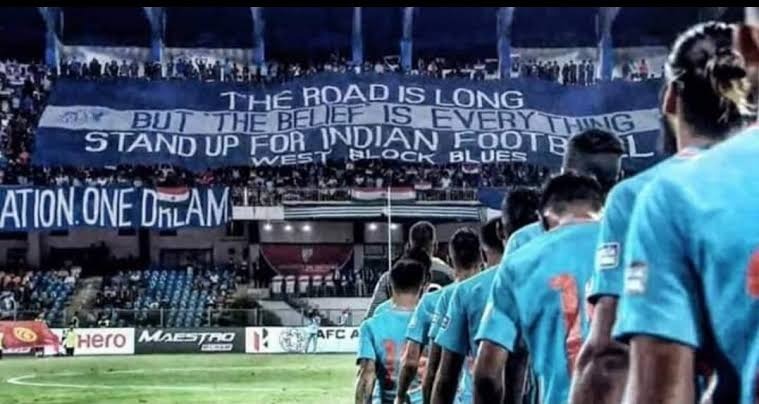
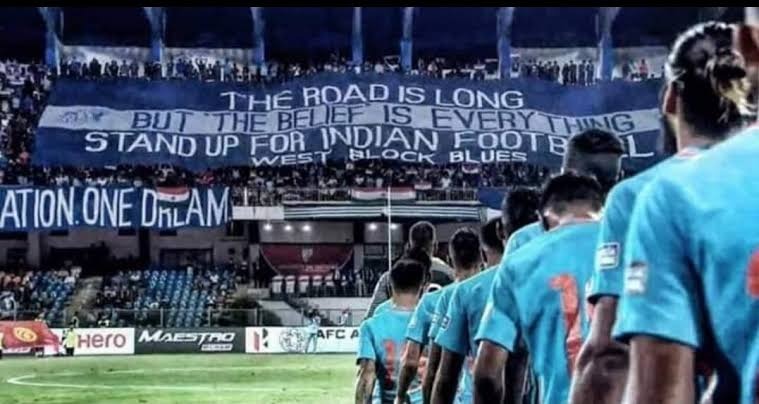
For a few fleeting hours, Indian football felt alive again.
East Bengal FC had just been crowned Indian Super League champions after a dramatic final day. Red and gold celebrations erupted across Kolkata as one of India’s most historic clubs finally ended a 22-year wait for a national league title.
In another reality, this should have been the perfect moment for Indian football — tradition meeting modernity, legacy clubs winning the biggest prize in the country’s newest league.
But almost immediately after the celebrations came the reminder of a much harsher truth.
Several ISL clubs issued a joint statement warning that they may not be able to continue supporting the league long-term due to ongoing uncertainty around governance, finances, and the commercial structure of Indian football. The statement was publicly shared by clubs including Bengaluru FC, Odisha FC, Inter Kashi and FC Goa, who warned that the “absence of structural certainty, commercial clarity and long-term visibility” was making it increasingly difficult to justify continued financial and operational commitments to the league.
And suddenly, the story of the season stopped being about champions.
It became about survival.
Before the ISL, There Was the I-League
Long before the ISL arrived with celebrity owners and prime-time broadcasts, Indian football already had a national league structure.
The National Football League and later the I-League carried the sport through decades where football survived more on passion than commercial success. Clubs like East Bengal, Mohun Bagan, Dempo, Churchill Brothers and later Bengaluru FC built loyal fanbases and footballing cultures despite limited money and exposure.
But while the I-League produced players and traditional rivalries, it struggled to grow commercially. Stadiums were often half-empty, broadcasting reach was limited, and Indian football lacked the visibility needed to compete with cricket’s dominance.
The ISL changed that.
But instead of seamlessly replacing the old system, Indian football spent years stuck between two worlds — the tradition of the I-League and the commercial ambition of the ISL. Even today, the I-League still exists, creating a football pyramid that often feels uncertain about its own identity.
The ISL Dream That Changed Everything
When the Indian Super League began in 2014, it arrived with ambition, glamour, and promises.
The league was designed to transform Indian football into an entertainment product. Big investors entered the sport. Bollywood names became club owners. International stars such as Alessandro Del Piero, Robert Pires, Diego Forlán and Elano arrived to bring attention and credibility.
For the first time in years, Indian football felt commercially relevant.
The ISL succeeded in creating visibility that Indian football had long struggled for. Stadiums were fuller, television numbers improved, and young fans finally had a domestic league they could emotionally invest in.
But beneath the growth, cracks slowly began to appear.
Traditional clubs and legacy football cultures often found themselves clashing with the franchise model. Promotion and relegation were absent. Financial sustainability remained shaky. Clubs became heavily dependent on broadcasters and central revenue instead of building stable football ecosystems of their own.
For years, optimism masked those issues.
Now, they are impossible to ignore.
A Season That Barely Happened
The 2025–26 ISL season was unlike any before it.
Administrative uncertainty and disagreements over the future commercial structure of the league delayed the season significantly. Eventually, a shortened “make-shift” version of the ISL was approved, with teams playing only 13 matches in a truncated format.
Even then, there was no sense of stability.
Reports throughout the season suggested clubs were frustrated with the lack of clarity regarding the future commercial partner, revenue distribution, governance structure, and operational responsibilities.
Some clubs openly questioned whether the financial losses were worth continuing under the current system.
So while fans watched an exciting title race involving East Bengal, Mohun Bagan, Mumbai City and Punjab FC, the people running those clubs were simultaneously wondering what the future of the competition even looked like.
That contradiction perfectly sums up Indian football today:
The football can still create moments.
The system around it cannot sustain them.
When Survival Becomes the Main Goal
The joint statement publicly shared by clubs including Bengaluru FC, Odisha FC, Inter Kashi and FC Goa after the season wasn’t simply frustration.
It felt like exhaustion.
Clubs spoke about the absence of “structural certainty, commercial clarity and long-term visibility.”
That matters because most ISL clubs are already operating at heavy losses.
Without stable broadcasting deals, sponsorship confidence, or a clear roadmap from the federation, clubs are essentially being asked to continue spending crores without knowing what the competition will look like next season — or whether the ecosystem around them will even improve.
And this is where Indian football finds itself trapped.
The federation needs investors.
Investors need stability.
Fans need belief.
But none of those things can survive without the other.
The Hope Still Exists — Just Not Where You Expect
And yet, despite all of this chaos, Indian football still keeps producing remarkable stories.
Perhaps none bigger recently than Minerva Academy defeating Liverpool’s youth side 6–0 at the MIC Cup in Spain — a result that stunned many outside Indian football.
What made it even more symbolic was the story behind it. The trip reportedly almost never happened because of financial struggles and limited backing, forcing Minerva to turn to crowd funding and public support just to make the journey possible. An online campaign aimed to raise ₹1 crore for the academy’s international exposure and participation.
And few people represent that reality more than Ranjit Bajaj.
The owner of Minerva Academy has long been one of the loudest voices pushing Indian football to think bigger despite operating with limited support. Before the Liverpool game, Bajaj’s dressing room speech went viral. “I want Liverpool’s scalp,” he told his players, before reminding them: “Indians are not getting opportunities, that’s why we are not here all the time.”
It was more than motivation. It captured the frustration around Indian football itself — a country with talent and ambition, but without enough opportunities or support structures to consistently compete at the highest level.
And maybe that is the biggest contradiction in Indian football today.
Some of its strongest hope for the future still comes from people operating with the least support.
Should India Open More Global Pathways?
Another major concern surrounding Indian football is how disconnected it still feels from the global football ecosystem.
While countries across Asia increasingly export players to stronger football environments in Europe, Japan, Australia and the Middle East, India still produces very few players regularly competing abroad. For a country of its size and ambition, the overseas pathway for Indian footballers remains surprisingly limited.
That has led to growing conversations around whether Indian football needs to think more globally about talent development and national team eligibility.
Cases like Ryan Williams have reignited debate around overseas citizenship pathways, diaspora talent, and whether India should make it easier for players with Indian heritage and international exposure to represent the national team.
Supporters argue that integrating more overseas-based players could immediately raise standards, improve professionalism, and expose Indian football to stronger football cultures. Others believe the focus should remain on fixing grassroots structures within India rather than relying on external solutions.
Realistically, Indian football may eventually need both.
Because successful football nations do not simply build domestic leagues. They create systems connected to the global game — where players compete abroad, develop in stronger environments, and bring that experience back into the national setup.
At the moment, Indian football still feels isolated from that pathway.
And perhaps that is part of the bigger problem.
Indian football has spent years trying to grow internally, but without stronger global integration, clearer development routes, and sustained international exposure, the gap between India and the countries consistently competing at World Cups may continue to grow.
Because eventually, Indian football will have to answer one uncomfortable question:
Who comes after Sunil Chhetri?
For nearly two decades, India’s football identity has revolved around one player carrying the expectations of an entire system. Finding the next Sunil Chhetri will not simply come from hope or individual talent alone.
It will come from building pathways that allow many more Indian footballers to dream, develop, and compete at the highest level possible.
The Fear Is No Longer Failure. It’s Stagnation.
East Bengal winning the title should have been a landmark moment for Indian football. Instead, it became the backdrop to another existential crisis.
That is perhaps the biggest concern surrounding the game today. Indian football does not lack passion, history, or talent. Fans still care deeply. Young players still dream. Academies like Minerva continue fighting to create opportunities despite operating with limited support.
But every few years, the sport seems to restart from scratch — a new roadmap, a new structure, a new promise, followed by another crisis.
And while countries across Asia continue building sustainable football ecosystems, India still feels stuck debating its foundations.
Which brings us to the one question that has followed generations of Indian football fans:
When will India play in a FIFA World Cup?
For years, that dream has been sold through promises, league launches, structural changes and ambitious roadmaps. Yet the gap between ambition and reality still feels enormous.
Because qualifying for a World Cup is not just about creating moments or headlines.
It is about building systems.
Stable leagues.
Grassroots investment.
Youth development.
Long-term planning.
And above all, direction.
The fear now is no longer failure.
It is stagnation.
Because without structural clarity, financial stability, and a united football vision, even the biggest moments risk becoming temporary distractions rather than signs of progress.
The question is no longer whether Indian football has potential.
It is whether the people running the game can finally give it something it has lacked for decades:
Not promises.
Not temporary fixes.
But a real future.