How Europe Profits From Africa’s Football Goldmine
Europe’s biggest leagues are powered by African talent… but Africa barely sees the reward. Why does the continent that produces the diamonds only get the dust? Here’s the full story — from academies to transfers to the money trail.
Ananth Shivram
11/30/20254 min read
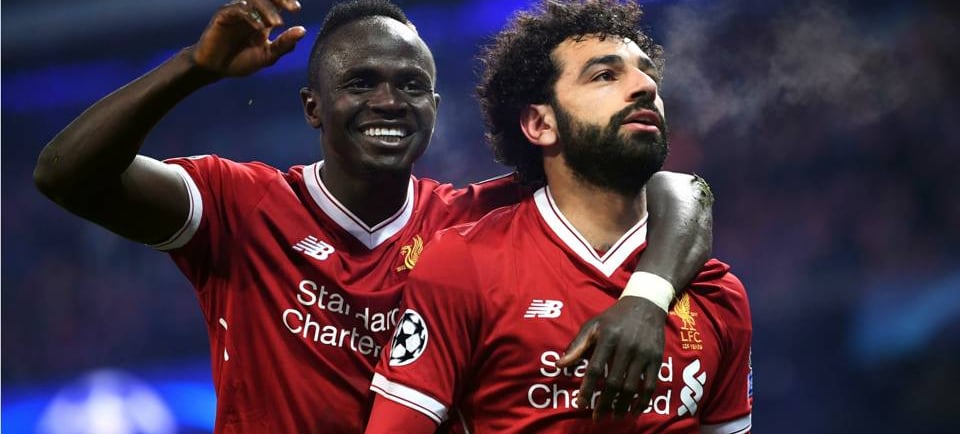
Watch a single weekend of European football and one thing jumps out immediately — African players are everywhere. From Mohamed Salah and Victor Osimhen to Achraf Hakimi, Serhou Guirassy, Mohammed Kudus and Edmond Tapsoba, Africa’s influence runs through every major league.
Even players born in Africa often don’t represent African nations. Just look at France — a national team powered by the descendants or natives of Mali, Senegal, Guinea, DR Congo, Cameroon, and Algeria. The world champions of 2018 had more African-born or African-heritage players than European-born ones.
Africa produces talent. Europe reaps the rewards.
But the journey of how these players get from Accra or Dakar to Liverpool, London, or Munich — and who profits along the way — is far less glamorous.
The Journey: From African Academies to Europe’s Peripheral Leagues
Most African players don’t go straight from an academy in Senegal or Ghana to Manchester or Madrid.
Their first stop is usually Europe’s “gateway” leagues — the Netherlands, Denmark, Belgium, Portugal, Austria. These leagues are cheaper, easier to enter, and act as audition stages for the Premier League, Bundesliga, and La Liga.
A few African nations dominate this export machine:
Nigeria, Senegal, Ghana, Ivory Coast and Mali consistently produce some of the world’s most sought-after teenagers.
And their most common destinations? Portugal, Belgium, Denmark, Austria, and France — the continent’s long-established talent importers.
Every year, African players generate hundreds of millions of euros in transfer fees.
But less than 1% of that money goes back to the academies in Africa that trained them.
So why does the continent that produces the talent benefit the least?
Because the two biggest pathways out of Africa are built on systems where Europe holds all the power.
The Two Popular Pathways Out of Africa
Pathway 1: European Club Partners With an African Academy
This is the most structured, predictable route — and the one that shows how profitable the African pipeline really is.
FC Metz × Génération Foot (Senegal) is the gold-standard example.
Metz funds facilities, coaching and scouting in Senegal. In return, it gets first rights to the best talent every year.
The system has produced stars such as:
Sadio Mané
Ismaïla Sarr
Papiss Cissé
Take Sadio Mané’s journey — the perfect illustration of how African football is undervalued:
Génération Foot → FC Metz → RB Salzburg → Southampton → Liverpool → Bayern Munich → Al-Nassr
Over his illustrious career, Sadio Mané netted over £120 million in Transfer fees.
Génération Foot — the academy that discovered him — received around £200,000 in solidarity payments. Less than 0.2%.
Why so little?
Because his biggest transfer (Southampton → Liverpool) was a domestic deal, which does not qualify under FIFA's solidarity mechanism.
Africa develops the diamond.
Europe sells the diamond — to Europe.
Pathway 2: African Academies Place Players in Small European Clubs
The second route is more chaotic but increasingly common.
Players move from an African academy to a smaller European club that specialises in developing and flipping talent.
The best modern example?
Mohammed Kudus
Right to Dream (Ghana) → FC Nordsjaelland (Denmark) → Ajax → West Ham → Tottenham (2024)
By the time Kudus entered the Premier League, transfer fees had ballooned — but solidarity payments barely trickled back to Ghana.
Why?
Because most of the largest fees are paid in Europe → Europe transfers, not Africa → Europe transfers.
The African academy gets pennies.
Europe gets millions.
The Money Trail: The System Isn’t Broken — It Was Built This Way
FIFA does have a mechanism to compensate training clubs:
The Solidarity Payment Rule – 5% of any transfer fee must be shared among the clubs that trained the player between ages 12–23.
In theory, it rewards the academies that developed the player.
In practice, it’s one of the weakest redistribution systems in world football.
Here’s why:
1. The biggest transfers rarely include solidarity payments
If the deal is domestic (within the same association), the African academy gets nothing.
This is exactly what happened with Sadio Mané and Kudus who made big money moves within the Premier League in England, but were not applicable for solidarity payments
2. African academies often can’t file the paperwork
Most have no dedicated legal or administrative staff to send claims to FIFA.
Even when FIFA launched the Clearing House to automate payments, it only works if the academy is registered in the FIFA Connect system.
The clearest example is Nicolas Jackson.
When he made his big move to Chelsea, his early years in Senegal weren’t properly registered in FIFA’s system. No paperwork meant no proof — and no proof meant zero solidarity payments to the academy that actually developed him.
3. Lack of leverage
A European club offering €100,000 for a 17-year-old might seem tiny to Europe — but it can fund an African academy for a year.
They can’t negotiate sell-on clauses.
They can’t demand future payments.
They need the money now.
4. Governance chaos
CAF, unlike UEFA, cannot enforce uniform commercial regulations across the continent.
Every country has its own registration system, its own auditing, its own rules.
Without centralised oversight, even FIFA’s rules become optional.
Africa produces the talent
→ Europe chooses the price
→ Africa receives scraps
Not by accident — but by design.
The Solutions: The Future of African Football Is Being Written Now
Despite the system’s flaws, there are rays of hope — models that could rewrite African football’s future.
Right to Dream (Ghana): A Blueprint That Works
Unlike most academies, Right to Dream controls the entire pathway.
It owns FC Nordsjaelland in Denmark, meaning players stay in the same ecosystem from youth to professional football.
This removes middlemen, ensures revenue stays within the system, and gives the academy leverage.
Mohammed Kudus, who we spoke about earlier, is the best example of how powerful this model can be.
The model’s success drew major investment — the whole system was bought by an Egyptian conglomerate for $120 million.
African football isn’t short of talent. It’s short of ownership.
The African Football League (AFL)
CAF and FIFA recently launched the AFL, a new continent-wide league meant to raise standards, visibility, and revenue.
Prize money is small by European standards (€4 million) but is the highest CAF has ever offered.
The plan is to expand to 24 teams and integrate with the African Champions League.
A stronger domestic league ecosystem means:
Top players stay longer before moving to Europe
Transfer values rise
Solidarity payments become meaningful
More money circulates within Africa
Keep the talent at home longer → sell later → sell for more → reinvest.
That’s the formula.
African football is not short of genius.
It’s short of control.
Europe built a system where African talent is a cheap raw material — exported young, processed abroad, and sold for fortunes Africa never sees.
Fixing it won’t happen overnight.
But with stronger governance, integrated academies, and continental competitions that keep players home longer, Africa can finally start benefiting from what it produces in abundance:
The future of world football.