
From the Arctic Circle to Europe’s Biggest Stage : The Fairytale Rise of FK Bodø/Glimt
From the freezing nights of the Arctic Circle to some of Europe’s biggest stages, the rise of FK Bodø/Glimt is one of modern football’s most remarkable stories. ❄️⚽ This piece explores how a club from the small northern city of Bodø rose from humble beginnings to challenge Europe’s elite under the guidance of Kjetil Knutsen — tracing the key moments, unforgettable European nights and the players who helped put this Arctic club on the footballing map.
Ananth Shivram
3/14/20264 min read
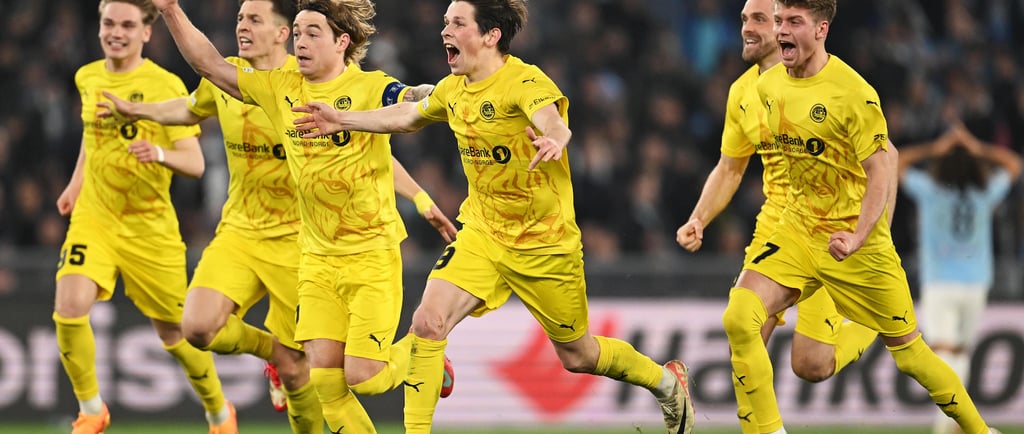
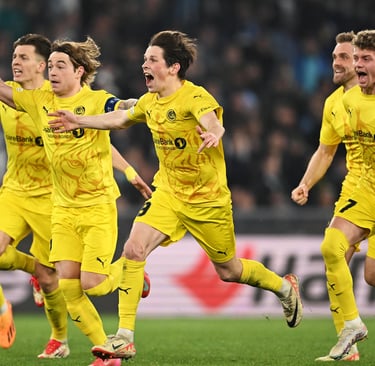
On a freezing night above the Arctic Circle, the floodlights of Aspmyra Stadion cut through the cold Norwegian air. Barely 8,000 supporters pack into a stadium that would look modest even by second-division European standards.
The wind rolls in from the Norwegian Sea, temperatures drop well below freezing, and the artificial pitch glistens under the lights.
This is home to FK Bodø/Glimt.
A club from the small northern city of Bodø — a town better known for fishing, midnight suns and Arctic winters than European football.
For decades, Bodø/Glimt existed on the margins of the game. Far from the glamour of Europe’s major leagues, far from the financial muscle that defines modern football.
Yet over the past decade, something remarkable has been quietly taking shape here in the north.
A club built on belief, clarity of purpose and fearless football — one that awould soon force the rest of Europe to start paying attention.
But every remarkable story has a beginning — and Bodø/Glimt’s starts in a small Arctic town over a century ago.
A Club Born in the Arctic
Founded in 1916, FK Bodø/Glimt comes from the small Arctic city of Bodø — a place better known for fishing villages, midnight suns and long winter nights than European football.
For decades, the club existed far from the spotlight of the game. Located above the Arctic Circle, geography shaped its reality: long travel distances, limited resources and limited national attention.
Home matches at Aspmyra Stadion often came with biting Arctic winds, freezing temperatures and an artificial pitch that visiting teams struggled to adapt to.
Yet beneath the surface, the foundations of a new era were slowly forming.
The Turning Point
The modern transformation of Bodø/Glimt began in 2018 with the appointment of manager Kjetil Knutsen.
Knutsen arrived with a clear philosophy rather than a superstar résumé.
His vision was simple but bold: Bodø/Glimt would play proactive, attacking football regardless of the opposition.
High pressing. Quick transitions. Intelligent positional play. Relentless energy.
Rather than attempting to replicate the spending power of Europe’s giants, the club built an identity around development, smart recruitment and tactical clarity.
Young players were trusted. Undervalued talent was identified. The system mattered more than individual stars.
What followed was one of the most remarkable transformations in modern European football.
Timeline of the Rise
2017 – Back to the Top
After years of instability, Bodø/Glimt win promotion to Norway’s top division, the Eliteserien.
Few expect them to become anything more than a competitive mid-table side.
2020 – History Made
Bodø/Glimt win their first ever league title, dominating the Eliteserien with an aggressive attacking style and breaking scoring records along the way.
For the first time, the rest of Norway begins to realise that something special is being built in the north.
2021–22 – Europe Takes Notice
Their first major continental breakthrough arrives in the UEFA Europa Conference League.
In a result that sends shockwaves across Europe, Bodø/Glimt demolish A.S. Roma 6–1 in the group stage — one of the heaviest defeats in the managerial career of José Mourinho.
The club eventually reaches the quarter-finals and announces itself as one of Europe’s most exciting emerging teams.
2025 – Europa League Breakthrough
The next step in their European journey arrives in the UEFA Europa League.
By now Bodø/Glimt are no longer viewed as a novelty. Their pressing game, tactical discipline and fearless attacking football allow them to compete with some of Europe’s biggest clubs.
The run takes them all the way to the Europa League semi-final, where they eventually fall to Tottenham Hotspur F.C..
Even in defeat, the message is clear: this Arctic club belongs on Europe’s biggest stages.
2025–26 – The Champions League Dream
This season marks their greatest achievement yet in the UEFA Champions League.
Against opponents with far greater resources and experience, Bodø/Glimt have produced a series of stunning results.
They stunned Manchester City F.C. with a 3–0 victory at home under the Arctic lights at Aspmyra Stadion.
They followed it up by beating another European heavyweight, Atlético Madrid in Madrid to secure their position in the knockout phase of the Champions League.
Next came perhaps their biggest scalp yet: a commanding 5–2 aggregate victory over Inter Milan, three-time European champions.
They now hold a 3–0 advantage over Sporting CP, placing them on the brink of a historic Champions League quarter-final.
What makes the run even more remarkable is the scale of the imbalance. The entire Bodø/Glimt squad is valued at a fraction of the teams they have eliminated — in some cases costing less than a single player in their opponents’ starting line-ups.
The Legends Behind the Rise
Every club story is shaped by individuals who embody its spirit.
For Bodø/Glimt, that spirit is represented by players who chose belief over glamour.
Midfielder Ulrik Saltnes has been a constant presence throughout the club’s rise — a leader who represents its work ethic and identity.
Captain Patrick Berg has become the tactical heartbeat of the team, dictating tempo and providing defensive stability.
Forward Amahl Pellegrino delivered crucial goals during the club’s title-winning seasons, while winger Jens Petter Hauge represents the academy pathway that has become central to the club’s philosophy.
Together they form the backbone of a team built not on superstars but on collective strength.
The Bodø/Glimt Model
Beyond the fairy-tale narrative, the club represents something deeper about modern football.
Their success is not accidental.
It is built on a model that many clubs across Europe could learn from.
Clear identity
Every level of the club understands the style of football they want to play.
Smart recruitment
Instead of chasing expensive stars, they identify undervalued players who fit their system.
Development over spending
Youth development and coaching remain central to the club’s philosophy.
Stability in leadership
The continuity provided by manager Kjetil Knutsen has allowed the project to grow organically.
In an era dominated by financial power, Bodø/Glimt have proven that structure and vision can still challenge wealth.
Whatever happens next, the story of FK Bodø/Glimt has already reshaped perceptions of what is possible for smaller clubs in European football.
Because somewhere above the Arctic Circle, in a small stadium surrounded by cold winds and passionate supporters, a footballing revolution has quietly taken shape.
And the rest of Europe is finally beginning to notice. ⚽❄️