
From Domestic Teams to Global Portfolios: How IPL’s Franchise Model Is Expanding Abroad
As IPL franchises expand beyond India into leagues such as The Hundred, SA20, ILT20, and Major League Cricket, cricket is entering a new era of global ownership. This piece explores how domestic teams are evolving into international portfolios, the strategic logic behind multi-league expansion, and the opportunities and risks shaping cricket’s rapidly changing business landscape.
Ananth Shivram
1/18/20265 min read
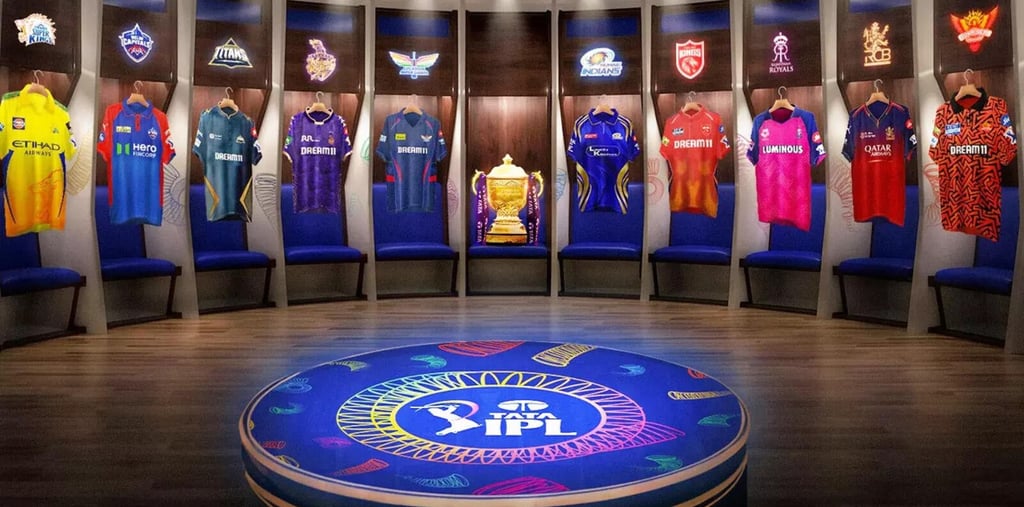
In modern sport, teams are no longer just competitors on the field; they have become assets in a growing global portfolio. Across elite football, groups such as City Football Group and BlueCo have demonstrated how owning multiple teams in different markets can unlock scale — commercially, operationally, and strategically — while still competing in distinct leagues.
Cricket is increasingly moving in the same direction. Over the past decade, franchise ownership has expanded beyond domestic borders, with teams now operating across multiple leagues and geographies. What began as selective investments has steadily evolved into a structured, repeatable model rather than one-off transactions.
The latest developments in The Hundred reflect this shift. As England’s newest short-format competition opens itself to private investment, it has become the next frontier for global franchise ownership — setting the stage for another chapter in cricket’s rapidly changing business landscape.
What Is The Hundred — and Why Did It Open Up to New Investment?
Launched in 2021 by the England and Wales Cricket Board (ECB), The Hundred was introduced as a bold reinvention of cricket. Built around a 100-ball format, the competition aimed to attract new audiences — particularly younger fans and families — while enhancing the commercial appeal of England’s domestic game. With city-based franchises, prime-time scheduling, and strong free-to-air broadcast backing, the league quickly established itself as one of the most visible short-format tournaments in world cricket.
As the league matured, the ECB identified the need for long-term financial sustainability, franchise-level accountability, and access to global expertise. Rather than continuing with a fully centralised ownership model, it opened the league to private investment by selling stakes in all eight teams. The move was designed to inject fresh capital, reduce financial risk, support the wider domestic structure, and accelerate long-term growth.
This shift reshaped The Hundred, with equity stakes acquired by a mix of international investors — including several linked to IPL ownership groups — accelerating cross-league franchise involvement.
IPL-Connected Investments:
Manchester Originals: RPSG Group (owners of Lucknow Super Giants) acquired a majority stake.
Northern Superchargers: Sun TV Network (owners of Sunrisers Hyderabad) secured full ownership.
Southern Brave: GMR Group (co-owners of Delhi Capitals) purchased a significant stake.
Oval Invincibles: Mumbai Indians’ parent group acquired a 49% stake, marking another IPL franchise’s expansion into the UK market.
Beyond IPL-linked ownership, global finance and sports consortiums have also invested in teams such as London Spirit, Welsh Fire, Birmingham Phoenix, and Trent Rockets, reinforcing The Hundred as a key convergence point for global cricket franchise capital.
Why IPL Franchises Are Expanding Abroad
The growing presence of IPL franchise owners across overseas leagues reflects a deliberate move towards building multi-league cricket portfolios, where teams operate across different competitions and calendars under shared ownership structures.
Leagues such as SA20 (South Africa), ILT20 (UAE), and Major League Cricket (MLC, USA) have become key pillars of this expansion. Many IPL brands carry familiar identities, colours, and operational philosophies into these leagues, helping maintain brand consistency while reaching new audiences. Examples include MI Cape Town (SA20), Dubai Capitals (ILT20), and Texas Super Kings (MLC).
The benefits are clear: overseas investments open access to new fan bases, commercial partners, and broadcasters, while fitting neatly into the global cricket calendar without clashing with the IPL. Shared scouting networks, analytics frameworks, coaching resources, and commercial partnerships also improve efficiency across leagues, creating a connected ecosystem rather than a collection of standalone teams.
Notably, Royal Challengers Bangalore remain an outlier. Due to strategic caution, valuation considerations, and a focus on domestic consolidation, they have so far refrained from investing abroad — highlighting that global expansion is a calculated risk and not a guaranteed formula for success.
IPL Franchises & Their Overseas Investments
Mumbai Indians (MI) – Reliance Industries / Mukesh & Nita Ambani
MI Cape Town — SA20
MI Emirates — ILT20
MI New York — MLC
MI London — The Hundred (49% stake; Oval Invincibles rebrand)Chennai Super Kings (CSK) – India Cements / N. Srinivasan
Joburg Super Kings — SA20
Texas Super Kings — MLCKolkata Knight Riders (KKR) – Shah Rukh Khan, Juhi Chawla, Jay Mehta
Abu Dhabi Knight Riders — ILT20
Trinbago Knight Riders — CPL
Los Angeles Knight Riders — MLCSunrisers Hyderabad (SRH) – Sun TV Network / Kalanithi Maran
Sunrisers Eastern Cape — SA20
Sunrisers Leeds — The Hundred (100% stake; Northern Superchargers rebrand)Lucknow Super Giants (LSG) – RPSG Group / Sanjiv Goenka
Durban Super Giants — SA20
Manchester Originals / Manchester Super Giants — The Hundred (majority stake)Delhi Capitals (DC) – GMR Group & JSW Group
Dubai Capitals — ILT20
Seattle Orcas — MLC
Southern Brave — The Hundred (49% stake via GMR)Rajasthan Royals (RR) – Royals Sports Group / Manoj Badale
Paarl Royals — SA20
Barbados Royals — CPLPunjab Kings (PBKS) – Mohit Burman, Ness Wadia, Preity Zinta, Karan Paul
No major overseas cricket franchise investments reportedGujarat Titans (GT) – Torrent Group & CVC Capital Partners
No major overseas cricket franchise investments reportedRoyal Challengers Bangalore (RCB) – United Spirits Ltd (Diageo)
No overseas cricket franchise investments reported
These investments highlight how IPL franchises are evolving into global cricket brands, leveraging domestic success to access new markets, grow fan bases, and experiment with multi-league operations. At the same time, the uneven adoption of this strategy underscores that global expansion is not a guaranteed success, setting the stage for both opportunities and challenges.
The Upside of Going Global: Visibility, Engagement, and Growth
Expanding abroad allows IPL franchises to turn domestic success into international brands, building fan bases across continents. Multi-league ownership provides diversified revenue streams, operational efficiency, and year-round engagement. Examples like MI Cape Town, Dubai Capitals, and Texas Super Kings show how franchises maintain brand identity while reaching new audiences.
Key Operational and Strategic Benefits:
Talent development: Rotate emerging players across leagues to gain experience in different conditions. For example, Dewald Brevis played for MI Cape Town (SA20) and MI New York (MLC), helping him adapt to different conditions and formats. Today, he is an integral part of the South African national team and holds a contract with Chennai Super Kings in the IPL, showing how multi-league exposure can accelerate player growth.
Economies of scale: Shared infrastructure and management systems reduce costs.
Global visibility: Continuous presence strengthens sponsorship appeal and brand loyalty.
The Flip Side of Expansion: Financial, Operational, and Fan Risks
Despite the opportunities, overseas expansion carries significant risks. Financial uncertainty is a major concern, with returns depending on league popularity, team performance, and local market conditions. Managing multiple teams across continents introduces logistical complexity, stretching management bandwidth and operational focus.
A critical challenge is fan connection and brand identity. Teams such as MI Emirates or Sunrisers Eastern Cape may struggle to resonate with local audiences because their names and branding are tied closely to Indian cities or IPL identities. This can limit merchandise sales, engagement, and long-term loyalty, even if the IPL brand carries global recognition.
Other risks include brand dilution if teams underperform abroad, and the need to navigate different governance, cultural, and regulatory environments, which requires specialised expertise. Player management is another concern, as travel and overlapping schedules may lead to fatigue or availability issues.
Examples of potential limitations:
Unequal adoption of overseas strategies may create competitive imbalances, with some franchises dominating multiple leagues while others remain domestic.
IPL-linked team names in foreign markets may struggle to connect with local fans, limiting growth and engagement.
The expansion of IPL franchises into leagues like SA20, ILT20, MLC, and The Hundred is more than a passing trend — it represents a strategic evolution of the franchise model. By leveraging brand strength, operational expertise, and multi-league synergies, IPL owners are positioning themselves as global cricket powerhouses, reaching new fans, unlocking diversified revenue streams, and developing talent pipelines across continents.
While challenges remain — from fan engagement and brand identity to operational complexity — the steady flow of investments, the increasing participation of multiple franchises, and the emergence of cross-league collaborations make it clear that this approach is not experimental, but here to stay. As cricket becomes ever more global, multi-league ownership and international franchise expansion are set to shape the sport’s commercial and competitive landscape for years to come, creating a new blueprint for how domestic success can translate into a worldwide sporting presence.