
Destiny Takes Its Time: The Long Road Back for the New York Knicks
A city that never stopped believing. A franchise that endured Finals heartbreak, superstar snubs, lottery disappointments and years as the NBA’s favourite punchline. Then, when New York finally stopped searching for shortcuts and started building patiently, everything changed. Because some journeys take longer than others. And some, like destiny, take 53 years. 🏆🗽⏳
Ananth Shivram
6/14/20266 min read
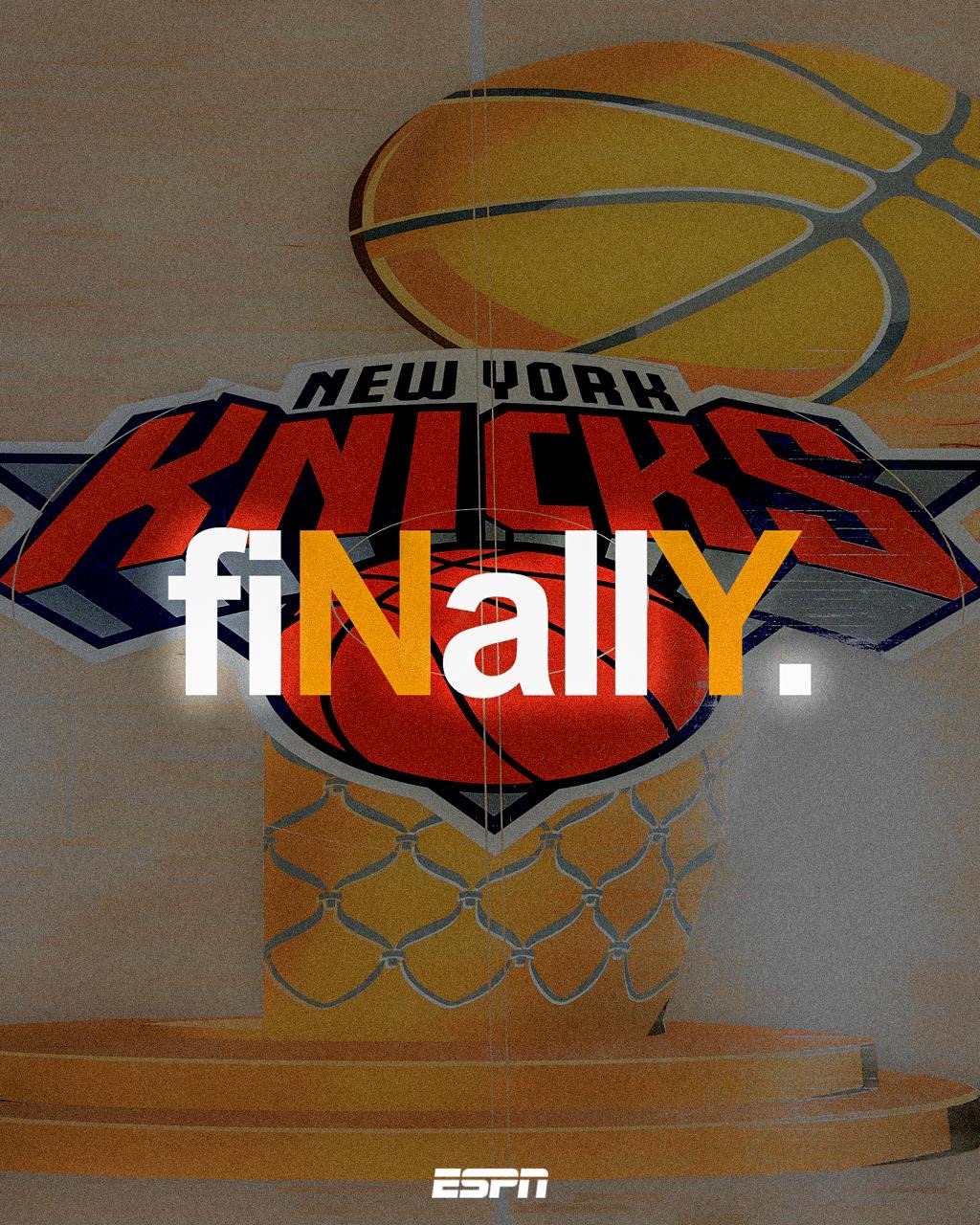
For 53 years, Madison Square Garden waited for a night that felt destined to happen.
Generations of Knicks fans came and went. Stars arrived and departed. Dreams rose and fell. Through it all, New York kept believing that one day basketball’s biggest stage would once again belong to its most famous arena.
The wait produced heroes, heartbreak and more than a few punchlines.
There was the miracle run to the 1999 NBA Finals.
There was Carmelo Anthony carrying the hopes of a city.
There was Linsanity, a basketball fairytale that briefly convinced New York that destiny had arrived ahead of schedule.
It never did.
Until now.
Because while New York has never lacked ambition, this championship wasn’t built on ambition alone. It was built on something far less glamorous and far more difficult.
Patience.
The Weight of Expectations
The New York Knicks are not supposed to disappear into irrelevance.
They play in the world’s most famous arena.
They represent the biggest city in American basketball.
They dominate headlines even when they lose.
Perhaps that’s why the drought felt so unusual.
This wasn’t a small-market team waiting for its moment.
This was New York.
Every year brought fresh expectations. Every offseason brought fresh rumours. Every superstar was linked to the Knicks at some point.
The city kept searching for a saviour.
Heartbreak Becomes a Habit
Long championship droughts are rarely defined by failure alone.
They are defined by near misses.
The 1999 Finals run remains one of the most remarkable stories in NBA history. An eighth-seeded Knicks team stormed through the Eastern Conference and gave New York reason to believe again.
The ending wasn’t the one fans wanted.
But it felt like the beginning of something.
It wasn’t.
Years later came Carmelo Anthony.
One of the league’s premier scorers arrived carrying the expectations of an entire city. He gave the Knicks relevance, excitement and unforgettable moments.
What he couldn’t give them was a championship.
Then came Jeremy Lin.
For a few magical weeks, basketball belonged to New York once more.
The story was too perfect.
The undrafted guard.
The packed Garden.
The game-winners.
The global phenomenon.
Linsanity felt like destiny.
Instead, it became another chapter in a story that never seemed to reach its ending.
The Summer That Changed Everything
If there was a moment that captured modern Knicks fandom, it was the summer of 2019.
The franchise entered the offseason expecting a transformation.
The draft lottery offered the possibility of Zion Williamson, the most anticipated prospect in years.
The Knicks fell in the lottery.
Disappointing, but manageable.
The real prize seemed to be free agency.
Kevin Durant was available.
Kyrie Irving was available.
The assumption across much of basketball was simple: New York would finally get its stars.
Instead, both chose Brooklyn.
The Knicks lost the lottery.
They lost the free agents.
And they became the punchline once again.
Yet, in hindsight, that summer may have been the best thing that happened to the franchise.
Because it forced them to stop chasing shortcuts.
The Villanova Knicks
For decades, the Knicks searched for a superstar capable of carrying the weight of New York.
Many arrived with bigger reputations.
Few left with bigger legacies.
Jalen Brunson wasn’t supposed to become the face of basketball’s biggest city.
He wasn’t a No. 1 overall pick.
He wasn’t the most athletic player in the league.
He wasn’t marketed as basketball’s next global superstar.
When the Knicks signed him from Dallas, the conversation wasn’t about championships. It was about whether New York had overpaid for a good player.
The criticism came quickly.
Could he be the best player on a contender?
Could a six-foot-two guard really carry the Knicks back to relevance?
Could he handle the pressure that comes with playing under the brightest lights in basketball?
Brunson answered every question the same way.
By winning.
But this wasn’t a story about one player.
It was a story about a group.
As the Knicks brought together former Villanova teammates Josh Hart and Mikal Bridges around Brunson, they weren’t simply collecting talented players. They were building around trust, chemistry and a shared understanding of what winning required.
In an era obsessed with assembling superteams, the Knicks built something different.
A team.
The Villanova connection became more than a media storyline.
It became the foundation of the franchise.
Brunson was its leader.
Hart brought relentless energy.
Bridges provided versatility and toughness.
Together, they gave New York an identity.
The ultimate symbol of that culture came away from the court.
At a time when stars across sports maximise every dollar available to them, Brunson chose to leave money on the table to give the Knicks greater flexibility to keep building around the core.
Leadership isn’t always measured in points.
Sometimes it’s measured in sacrifice.
Of course, talent and chemistry alone don’t win championships.
They need direction.
Enter Mike Brown.
Few coaches understand the demands of winning at the highest level better.
What Brown brought wasn’t just tactical expertise.
It was clarity.
In a city where every losing streak becomes a crisis and every playoff defeat sparks calls for change, Brown provided stability.
He reinforced the culture the organisation had spent years building and ensured that individual talent never became more important than collective success.
The Knicks didn’t become champions because they suddenly discovered how to play basketball.
They became champions because everyone — from the front office to the coaching staff to the stars on the floor — was pulling in the same direction.
For years, New York chased bigger stars.
In the end, it found something better.
A leader in Brunson.
A brotherhood in the Villanova core.
And a coach capable of turning belief into a championship.
By the time the Knicks lifted the Larry O’Brien Trophy, Jalen Brunson wasn’t simply the face of the franchise.
He was the King of New York.
And the Villanova Knicks had become champions.
Why This Championship Reflects the Modern NBA
The Knicks’ title is also a reflection of what the NBA has become.
For years, the league was defined by dynasties.
The Bulls.
The Lakers.
The Spurs.
The Warriors.
Teams that dominated eras and made championships feel inevitable.
Today’s NBA is different.
The league’s salary cap structure and increasingly restrictive spending rules punish mistakes more harshly than ever before.
A bad contract doesn’t simply cost money.
It can cost flexibility for years.
A failed trade doesn’t just hurt one season.
It can derail an entire championship window.
The result is a league where shortcuts rarely last.
That reality is reflected in a remarkable statistic: eight different champions in the last eight seasons.
Parity has replaced predictability.
The smallest mistakes are magnified.
The smartest organisations separate themselves not by making the most spectacular decisions, but by making the fewest bad ones.
The Knicks understood this.
They didn’t chase every superstar.
They didn’t panic after every setback.
They didn’t abandon their plan when they became the subject of jokes.
Instead, they trusted the process they had created.
One smart decision at a time.
One culture fit at a time.
One sacrifice at a time.
In today’s NBA, that discipline is often more valuable than talent alone.
And the Knicks became champions because they had both.
Destiny Takes Its Time
When the final buzzer sounded, the Knicks did more than end a 53-year drought.
They validated a philosophy.
For decades, New York searched for the player who would save the franchise.
Instead, the franchise saved itself.
Through smart decisions.
Through patience.
Through culture.
Through alignment.
Through an organisation willing to think long-term in a sporting world obsessed with immediate results.
Every chapter of the story mattered.
The heartbreak of 1999.
The disappointment of the Carmelo years.
The brief magic of Linsanity.
The humiliation of missing out on Zion Williamson, Kevin Durant and Kyrie Irving.
The gamble on Jalen Brunson.
The belief in the Villanova core.
The arrival of Mike Brown.
Individually, they were moments.
Together, they became a blueprint.
For years, the Knicks chased destiny.
They searched for it in draft lotteries.
They searched for it in free agency.
They searched for it in superstar acquisitions.
But destiny was never waiting around the next corner.
It was being built.
Quietly.
Patiently.
One decision at a time.
Fifty-three years is a long time to wait.
Long enough for generations of fans to inherit hope and heartbreak in equal measure.
Long enough for Madison Square Garden to become more famous for its history than its present.
Long enough for many to wonder whether the championship would ever return.
It did.
Not because the Knicks found a shortcut.
Not because they landed the biggest star.
Not because destiny suddenly smiled upon them.
It returned because an organisation finally committed to the hardest thing in sport.
Patience.
And as New York celebrated deep into the night, the lesson was impossible to miss.
In an NBA where salary cap rules punish mistakes and eight different champions have emerged in eight seasons, success belongs to the teams willing to build rather than buy.
Sometimes the longest road is the one that takes you exactly where you’re supposed to be.
Destiny, after all, takes its time.