
All or Nothing: Why Amazon Loves Premier League Clubs at a Crossroads
Fans watch “All or Nothing” for the dressing-room speeches, transfer discussions and behind-the-scenes drama. But the real story might be the clubs Amazon chooses to follow. Whether it's a title chase, a rebuild or the beginning of a new era, the cameras always seem to arrive when the future is uncertain. From Manchester City and Arsenal to Tottenham and now Manchester United, here's why Amazon keeps betting on unfinished stories.
Ananth Shivram
6/17/20265 min read
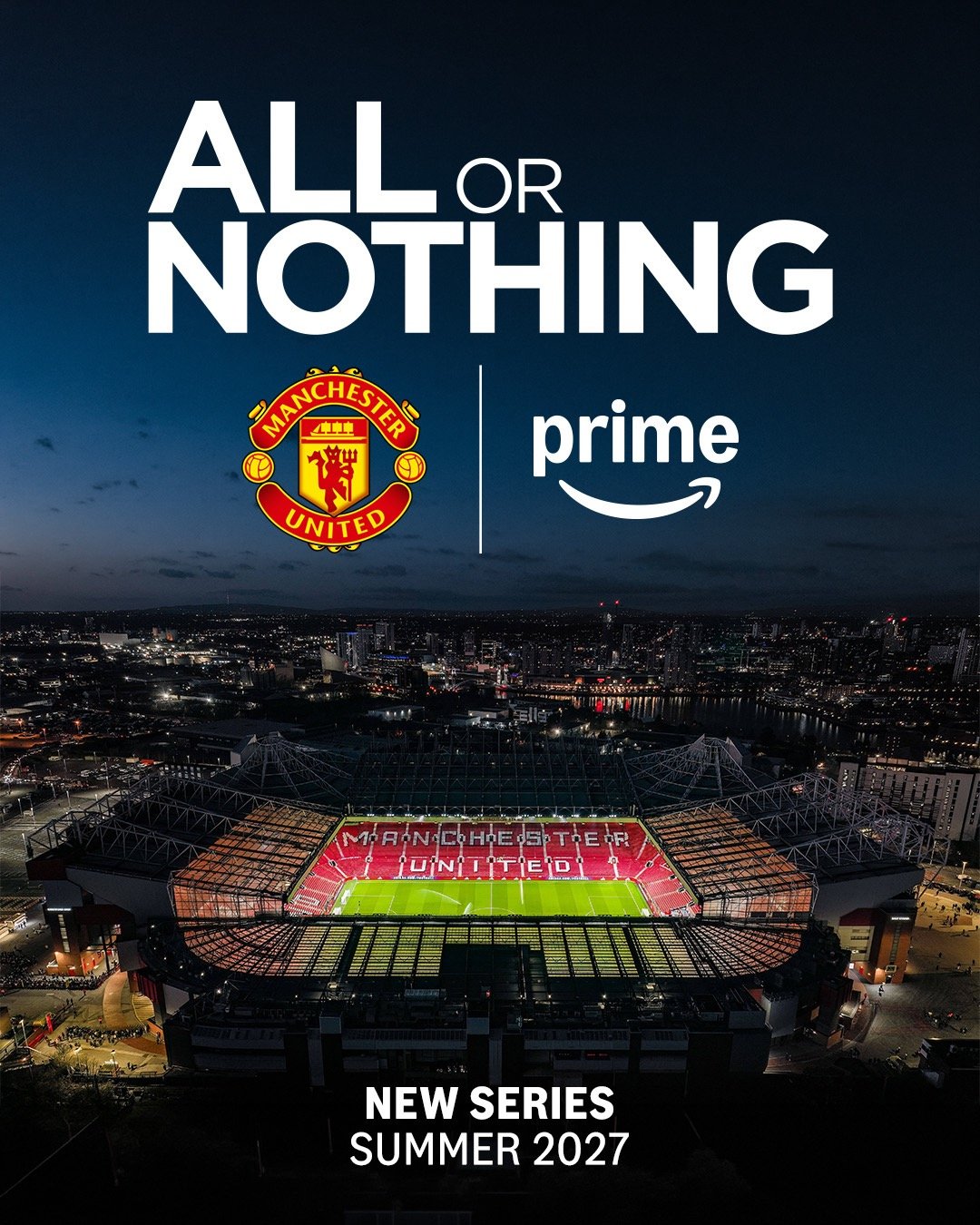
For nearly a decade, Amazon Prime's All or Nothing series has taken viewers behind the scenes of some of the biggest teams and sporting organisations in the world.
From NFL franchises and college football programs in the United States to national teams and football clubs across Europe, the formula has remained largely unchanged: gain unprecedented access, follow a team through a season and tell the story from the inside.
In recent years, however, the series has become increasingly associated with the Premier League.
Manchester City. Tottenham Hotspur. Arsenal.
Each club opened its doors to Amazon's cameras, giving supporters a rare glimpse into life beyond matchdays. Now, Manchester United are set to become the latest club to join the growing list.
On the surface, All or Nothing is a sports documentary.
In reality, it has become something much bigger.
It is a study of leadership, pressure, ambition and decision-making inside organisations operating under constant scrutiny.
And perhaps most interestingly, Amazon has developed a habit of arriving at clubs during some of the most pivotal moments in their history.
The cameras rarely show up after the story has been written.
They arrive when nobody knows how it will end.
Why Clubs Keep Saying Yes
At first glance, allowing cameras into dressing rooms, training grounds and boardrooms feels like an unnecessary risk.
So why do clubs continue to sign up?
The obvious answer is money.
Amazon reportedly pays millions for access, with Manchester United's upcoming documentary believed to be among the most lucrative deals in the history of the series.
But the cheque is only part of the equation.
Modern football clubs are no longer local institutions.
They are global brands.
A supporter in Manchester may attend matches every week, but millions of others experience the club from thousands of miles away.
A fan in India.
A student in America.
A family in Singapore.
Many will never visit Old Trafford, the Emirates or the Tottenham Hotspur Stadium.
Yet they can spend eight hours inside those clubs through a documentary.
That access creates something traditional broadcasts cannot.
Connection.
Supporters get to see how decisions are made, how managers lead, how players react to setbacks and how organisations function when the stadium lights are off.
In doing so, the documentary transforms clubs from football teams into stories.
And stories travel much further than football matches.
For Amazon, that means subscribers.
For clubs, it means deeper engagement with a global audience.
The result is a partnership where both sides benefit from the same thing:
Access.
The Amazon Formula
Looking at the clubs selected over the years, a pattern begins to emerge.
Amazon rarely arrives after a story has been written.
Instead, the cameras show up when nobody knows how the story will end.
Manchester City were chasing one of the greatest seasons in Premier League history.
Tottenham were entering a period of upheaval. Mauricio Pochettino was under pressure, José Mourinho would arrive midway through filming and the club was attempting to navigate a new chapter after reaching a Champions League final.
Arsenal were rebuilding under Mikel Arteta.
A young squad was trying to restore a club that had spent years drifting away from the top of English football.
And now Manchester United are beginning a new era under Michael Carrick.
The common thread isn't success.
It's uncertainty.
Amazon isn't paying millions to document trophies.
It's paying millions to capture what happens before anyone knows whether the trophies will arrive.
The Risks of Letting the Cameras In
Of course, not every club views these documentaries as a positive.
For every inspiring speech or emotional moment, there is the risk that something entirely different captures the public's attention.
Football fans have a remarkable ability to turn a ten-second clip into a meme that lives forever.
A dressing-room speech can become a joke.
A motivational quote can be endlessly recycled on social media.
An awkward interaction can overshadow an entire season.
Just ask José Mourinho and Mikel Arteta.
Years after Tottenham's documentary aired, many supporters still associate it with Mourinho's memorable one-liners and dressing-room speeches as much as the football itself.
Arsenal experienced something similar. During the release of their documentary, clips of Arteta's motivational methods spread rapidly across social media. Some were mocked, others became memes and many were taken out of context.
At the time, critics questioned whether the documentary was exposing too much.
But football has a funny way of changing perceptions.
As Arsenal developed into title challengers, many of those same moments began to be viewed differently. What was once mocked became evidence of a manager building a culture and identity behind the scenes.
That uncertainty is part of the risk.
When a club allows cameras inside, it loses control over how those moments will be received.
The next viral clip could strengthen a manager's reputation.
Or undermine it.
The reward is visibility.
The risk is vulnerability.
When Reality Takes Over
The irony of All or Nothing is that the most memorable moments rarely involve silverware.
Fans remember Mourinho's speeches.
They remember Arteta's team talks.
They remember difficult conversations, setbacks and moments of doubt.
Because uncertainty creates drama.
Take Tottenham's documentary.
What began as a story about a club attempting to take the final step towards sustained success quickly became a record of transition. Pochettino departed, Mourinho became the central figure and less than a year after the documentary was released, Mourinho himself had left the club.
The documentary became a time capsule.
A snapshot of a moment that would never exist again.
Arsenal's documentary followed a young side that narrowly missed out on Champions League qualification. At the time it felt like failure. Looking back, it now appears to have been a key step in the club's eventual rise.
Manchester City's series captured a record-breaking side at the peak of its powers.
Each documentary preserved a chapter of history before anyone knew how the wider story would unfold.
And that may be the greatest strength of the format.
The audience knows how the season ended.
But the people on screen don't.
Every team meeting, every transfer discussion and every dressing-room speech is delivered without the benefit of hindsight.
The uncertainty is real.
And that authenticity is what keeps viewers invested.
The Perfect Club for All or Nothing?
Which brings us to Manchester United.
Few clubs embody the All or Nothing formula better.
A global fanbase.
A storied history.
Enormous expectations.
And a club standing at the beginning of yet another new chapter.
Interestingly, Amazon's cameras could have arrived a year earlier. Reports suggest the opportunity was explored during Ruben Amorim's tenure, only for the proposal to be rejected as the club focused on navigating a difficult period on and off the pitch.
Now, the timing feels different.
Under Michael Carrick, Manchester United have entered a new era. Back in the Champions League and carrying renewed optimism, the club is attempting to turn progress into something more sustainable.
The foundations have been laid.
The expectations have returned.
And so have the questions.
Can Carrick restore Manchester United to the summit of English football?
Can this group compete with the very best teams in Europe?
Can a club that has spent years searching for stability finally build something lasting?
Nobody knows.
And that's precisely why Amazon is interested.
Because All or Nothing has never been about documenting certainty.
It has always been about capturing organisations at defining moments.
The cameras don't arrive when the destination is clear.
They arrive when the next chapter is just beginning.
For Manchester United, that chapter starts now.